Bruce Lee
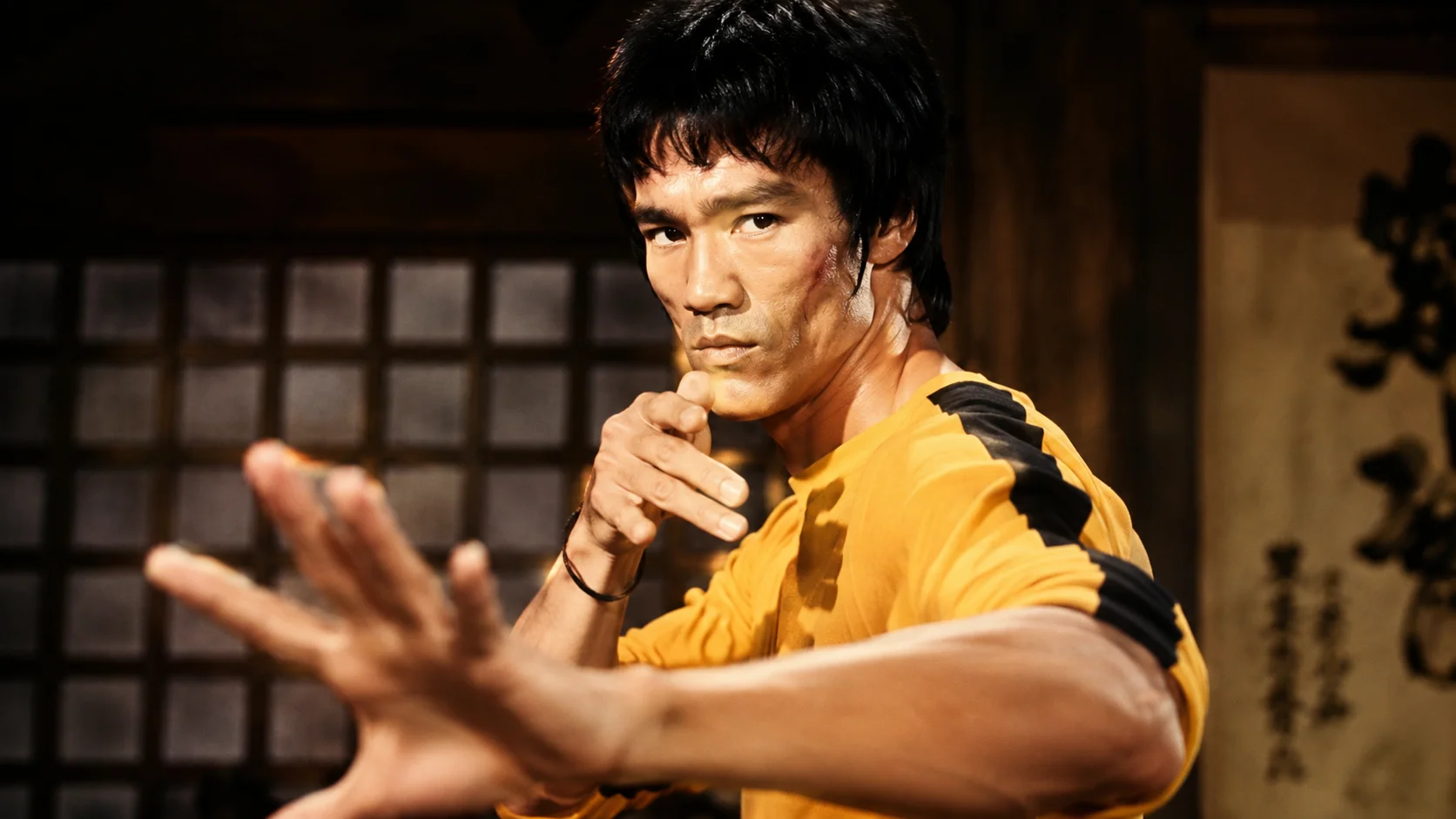
Bruce Lee was a pioneering martial artist, actor, and philosopher who founded Jeet Kune Do and became the first Asian lead in a major Hollywood film with Enter the Dragon.
Personal Information
Biography
Early Life and Background
Bruce Lee, born Lee Jun-fan on November 27, 1940, in San Francisco, entered the world during a brief American tour by his father, a Cantonese opera performer. Within months the family returned to Hong Kong, where Lee spent his childhood amid the upheaval of Japanese occupation and a booming local film industry. He was no stranger to a camera even as an infant, and by his teenage years he had appeared in roughly twenty Chinese films, earning a reputation as a restless, talented child actor. Off screen, Lee ran with a rougher crowd, drawn into street fights that worried his parents enough to push him toward discipline. At thirteen, he began studying Wing Chun under the renowned Ip Man, absorbing the close-range trapping and centerline theory that would shape everything he built afterward. That early grounding, paired with a childhood spent performing, planted the seeds of a career fusing combat and cinema in a way no one before him had managed.
Founding Jeet Kune Do
At eighteen, Lee left Hong Kong for the United States, eventually settling in Seattle, where he enrolled at the University of Washington to study philosophy. He supported himself teaching gung fu, first out of a parking garage and later a modest storefront, founding the Jun Fan Gung Fu Institute. Branches followed in Oakland and Los Angeles as his reputation spread through demonstrations, including a memorable appearance at the 1964 Long Beach International Karate Championships. By 1967, dissatisfied with the rigidity he saw in traditional styles, Lee coined a new name for his evolving system: Jeet Kune Do, the way of the intercepting fist. It rejected fixed forms in favor of directness and adaptability, drawing from boxing, fencing, and wrestling alongside his Wing Chun foundation. His private students during this period included Steve McQueen, James Coburn, and basketball star Kareem Abdul-Jabbar, a roster reflecting how far his reputation had already traveled beyond martial arts into Hollywood itself.
Breakthrough Into Film and TV
Lee's teaching drew the attention that jumpstarted his acting career in America. In 1966 he was cast as Kato, the acrobatic sidekick in the television series The Green Hornet, giving American audiences their first sustained look at his speed and precision. The show was short-lived, but Kato left an impression, and Lee picked up smaller parts in Marlowe and Longstreet while searching for bigger opportunities that Hollywood was slow to offer. Frustrated by the limited roles available to him, Lee returned to Hong Kong in 1971 and signed with Golden Harvest, where his fortunes changed almost immediately. The Big Boss became a box-office sensation, and Fist of Fury followed in 1972, cementing him as Hong Kong's biggest star. That same year he wrote, directed, and starred in The Way of the Dragon, taking creative control few actors of that era, in any country, could claim.
Hollywood Legacy and Enter the Dragon
Lee's Hong Kong success finally opened the door in Hollywood. Warner Bros. partnered with Golden Harvest on Enter the Dragon, a martial arts thriller built around Lee's screen presence and released in August 1973. It became the first major American production to star an Asian actor in the lead role, a landmark that reshaped how Asian performers were seen in Western film. The movie went on to gross well over one hundred million dollars worldwide, launching a martial arts craze across American theaters and turning Lee into a posthumous global icon. His fight choreography, blending realism with theatrical flair, influenced action cinema for decades, while his insistence on authentic technique over exaggerated spectacle set a new standard for the genre.
Death and Enduring Legacy
Bruce Lee died on July 20, 1973, in Hong Kong at age thirty-two, weeks before Enter the Dragon reached theaters. His death was officially attributed to cerebral edema, brought on by a hypersensitive reaction to a headache medication. In the decades since, Lee's influence has only widened. He earned a posthumous star on the Hollywood Walk of Fame in 1993 and a Hong Kong Film Award for lifetime achievement in 1994, alongside multiple inductions into martial arts halls of fame. His writings on Jeet Kune Do continue to shape how fighters train, and his philosophy of practical, adaptable combat is frequently cited as a forerunner of modern mixed martial arts. More than fifty years after his death, Bruce Lee remains the standard against which martial arts stardom is measured, a figure whose short career left a permanent mark on both sport and cinema.
FAQs About Bruce Lee
A: Bruce Lee died on July 20, 1973, in Hong Kong. His official cause of death was cerebral edema, brain swelling caused by a hypersensitive reaction to a headache medication called Equagesic.
A: Bruce Lee died on July 20, 1973, in Hong Kong, at the age of 32, just weeks before the release of his film Enter the Dragon.
A: Bruce Lee was 32 years old when he died on July 20, 1973. He was born on November 27, 1940, and passed away in Hong Kong.
A: Bruce Lee stood approximately 5 feet 7 to 5 feet 8 inches tall (170 to 173 cm), according to widely cited biographical sources.
A: Bruce Lee's son, Brandon Lee, died on March 31, 1993, after being accidentally shot on the set of the film The Crow by a prop gun loaded with a defective dummy round.
A: Bruce Lee is buried at Lake View Cemetery in Seattle, Washington. His son, Brandon Lee, is buried beside him.
A: Bruce Lee was born in San Francisco, California, on November 27, 1940, while his father was touring the U.S. with a Chinese opera troupe.
A: No official, verified measurement of Bruce Lee's kick force in psi exists. Widely circulated figures online are unsourced or drawn from debunked viral claims, so no confirmed number can be stated.
A: Bruce Lee's punch is often cited at around 350 pounds of force, though this figure comes from popular accounts rather than a single verified scientific test. His famous one-inch punch has been studied for its biomechanics rather than a precise force rating.
A: Bruce Lee typically weighed around 128 to 130 pounds (roughly 58 to 59 kg) during his peak fighting and film years, according to biographical sources.
A: Bruce Lee's primary martial arts teacher was Ip Man, the Wing Chun grandmaster who trained him in Hong Kong starting at around age 13.
A: Bruce Lee was renowned for exceptional strength relative to his size, built through intense daily training, including his signature one-inch punch and famous displays like breaking boards and sending training partners flying with a side kick.
A: Bruce Lee: A Warrior's Journey is a 2000 documentary that explores Lee's life and philosophy and includes previously unseen footage from his unfinished film Game of Death.
A: Bruce Lee changed the world by popularizing martial arts in Western cinema, founding Jeet Kune Do, and becoming the first major Asian lead actor in American film with Enter the Dragon, reshaping global perceptions of Asian performers.
A: Bruce Lee and Chuck Norris fought in a staged, choreographed fight scene in the 1972 film The Way of the Dragon, not in a real competitive match.
A: Bruce Lee is buried in Seattle because he attended the University of Washington there and began his martial arts teaching career in the city before later becoming a film star.
A: Bruce Lee was Chinese American. He was born in San Francisco to Chinese parents and was raised in Hong Kong, holding both American citizenship by birth and Hong Kong ties throughout his life.
A: Bruce Lee's primary teacher was Ip Man, the Wing Chun grandmaster who trained him in Hong Kong beginning around age 13.
A: Bruce Lee severely injured his back in 1970 while performing a "good morning" weightlifting exercise without properly warming up, damaging his fourth sacral nerve. Doctors initially told him he might never do martial arts again, though he recovered.
Career Timeline
Lee Jun-fan was born on November 27, 1940, in San Francisco, California, while his father toured the U.S. with a Chinese opera troupe.
At three months old, Lee appeared uncredited as an infant in the Cantonese drama Golden Gate Girl, marking his first screen appearance.
At age 13, Lee began studying Wing Chun under grandmaster Ip Man in Hong Kong, laying the foundation for his later martial arts system.
At 18, Lee left Hong Kong for the United States, eventually settling in Seattle to build a new life and career.
Lee enrolled at the University of Washington to study philosophy, a discipline that later shaped his writings on martial arts and self-expression.
Lee founded the Jun Fan Gung Fu Institute in Seattle, launching his career as a martial arts instructor.
Lee gave a landmark demonstration at the Long Beach International Karate Championships, showcasing techniques such as the one-inch punch.
Lee married Linda Emery, a former student, in August 1964. The couple later had two children, Brandon and Shannon.
Lee was cast as Kato in the television series The Green Hornet, his first major American screen role.
Lee founded Jeet Kune Do, a martial arts philosophy emphasizing directness, adaptability, and efficiency over fixed forms.
Lee signed with Golden Harvest and starred in The Big Boss, which became a major regional box-office success.
Fist of Fury was released, cementing Lee's status as Hong Kong's biggest film star.
Lee took full creative control of The Way of the Dragon, which also featured his staged fight scene with Chuck Norris.
Enter the Dragon, a Warner Bros.–Golden Harvest co-production, became the first major American film to star an Asian actor in the lead role.
Bruce Lee died on July 20, 1973, in Hong Kong at age 32, due to cerebral edema, weeks before Enter the Dragon's release.